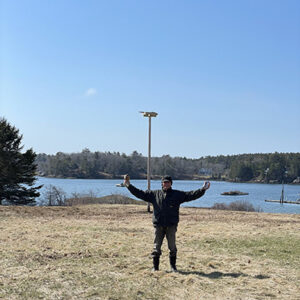


Volunteer and long-time birder, Stan Wakefield, shares regular updates and pictures on bird nesting activity at BRLT’s bird boxes monitored at Oak Point Farm, Singing Meadows, Lobster Cove Meadow, Penny Lake, and Zak preserves. Data is also reported to NestWatch, a citizen-science monitoring program developed by the Cornell Lab of Ornithology and used nationwide to track the status and trends in the reproductive biology of birds. We encourage readers to check back frequently from April-August to keep up on all of the changes throughout the season.
——————————————————————————————————————-
The Land Trust Nest Box Monitoring Season has come to a close for the 2026 season. That doesn’t mean that bird breeding activity has ended on the Boothbay peninsula, but only that the monitored nesting activity on six land trust preserves has wrapped up. Nesting activity will continue for several species through August and into September.
Overall, we had a pretty good season for Eastern Bluebirds and Tree Swallows (plus some Black-capped Chickadees). Unfortunately, there were a few failures in a few nest boxes, but that can happen for a variety of reasons. Failures included unhatched eggs and the death or disappearance of nestlings due to unknown causes. A total of 58 new Eastern Bluebirds, 39 new Tree Swallows, and 7 new Black-capped Chickadees fledged from 22 nest boxes this season. The number of Tree Swallows has increased slightly over previous years, as they appear to be taking over a few nests started or built by Bluebirds. We have no way to control this activity, as we are prohibited from removing the nests and/or eggs of any species, whether preferred or not, so it is really up to the Bluebirds to vigorously defend their nests against takeover by Tree Swallows.
To summarize the activity on each Land Trust Preserve:
Autumn View Preserve: 9 Tree Swallows fledged from 2 different nest boxes in June, while 5 Bluebirds fledged from 1 nest box in June (there was only 1 Bluebird nesting attempt rather than 2 this year).
Lobster Cove Meadow: 7 Bluebirds fledged from the same nest box in May and July, while 6 Tree Swallow youngsters disappeared from a nest before fledging, probably due to predation.
Oak Point Farm: 9 Bluebirds fledged from the same nest box in May and July, while 14 Tree Swallows fledged from 3 nest boxes in June. Of note, 1 nest box that has been used historically by Bluebirds every year for 5 years was not utilized by any species this season.
Penny Lake: 4 Bluebirds fledged from the same nest box in May (of the 5 Bluebird eggs in the 2nd brood in this nest box, only 3 hatched, but none survived). 6 Tree Swallows and 7 Black-capped Chickadees fledged from 2 different nest boxes in June.
Singing Meadows: 4 Bluebirds fledged in May and 5 more fledged from the same nest box in July; 2 Bluebirds fledged from a nest box in Aug (2 unhatched eggs were left behind); 11 more Bluebirds fledged from the same nest box in May and July; the first Bluebird batch of 6 eggs in a nest box in April failed to hatch, but a second batch of 6 eggs hatched and fledged in June; 2 different nest boxes fledged 8 Tree Swallows (one of those nests was a takeover of a nest started by Bluebirds).
Zak: 5 bluebirds fledged in June; 10 Tree Swallows fledged from 2 different nest boxes in June.
After several years of participating in the Land Trust Nest Box Monitoring Program, I have concluded my volunteer work in this role. BRLT staff members, Christine Selman, and Scott Peterson, will work with current volunteers as well as additional volunteers to continue this program. Those with an interest in volunteering should contact Christine at cselman@bbrlt.rog. It’s been a genuine pleasure to have done this important work.
August 3:
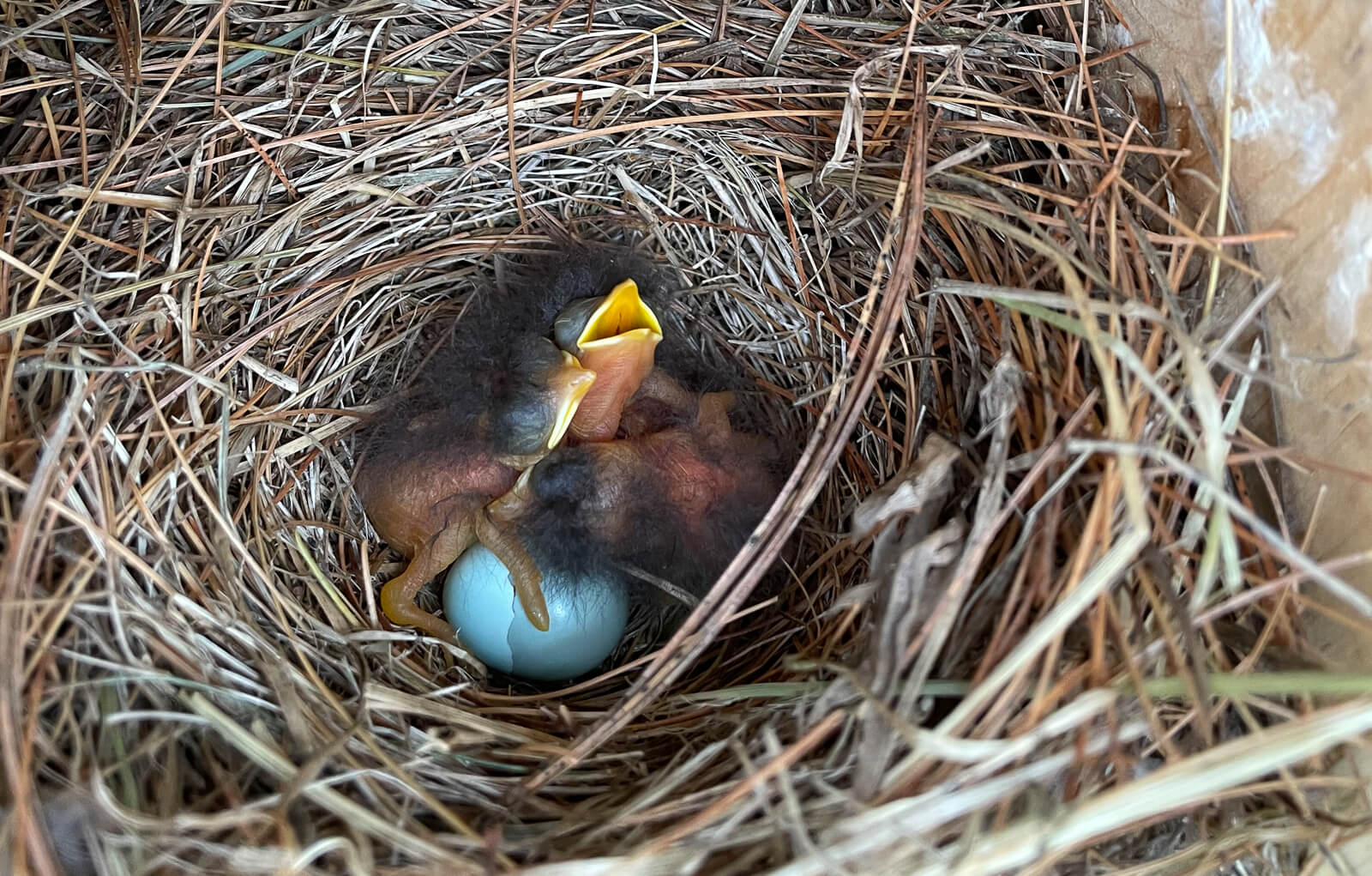
Two Bluebird hatchlings as seen on July 31st at approximately 3 days old. Part of one unhatched egg can be seen next to one of the hatchlings
A similar situation was observed at Zak Preserve, where only 2 of the 4 eggs hatched successfully. Both appear to be healthy and are expected to fledge on/about August 12th or 13th.
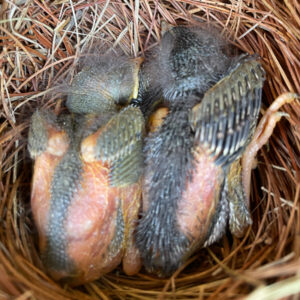
An August 1st photo of the 2 Bluebird nestlings at Zak at about 4 days old
A final Blog post for the season will be written after the youngsters in the nests at Singing Meadows and Zak have fledged in about two weeks. At that time, we will summarize the results of the breeding season for the species that have nested on six Land Trust Preserves.
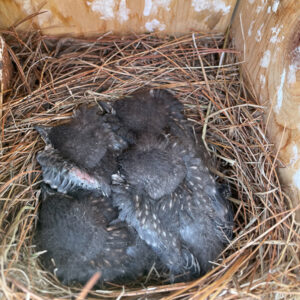
Soon to fledge Bluebirds at Oak Point Farm
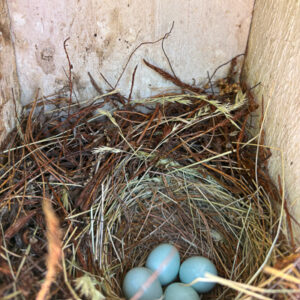
Bluebird eggs at Lobster Cove Meadow
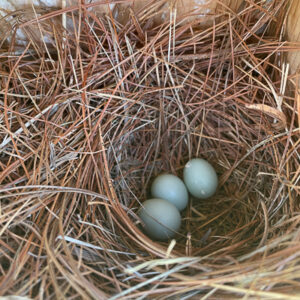 This marks one of the latest Bluebird nesting efforts we’ve seen in many years. If all goes well, the eggs should hatch later this month (around July 25th), and the youngsters should fledge in mid-August. We hope the hot, dry days of July & August will not adversely affect their health.
With the onset of true summer weather, the observable bird breeding season on six Land Trust preserves has reached the halfway point. On three of six preserves, the Tree Swallows have finished their single-brood season with 33 new, young Tree Swallows having fledged and now chasing flying insects. The last group of 17 young Tree Swallows is expected to fledge by the first week of July. The Bluebird nesting season continues with second broods on at least three preserves.
As expected, five young Bluebirds fledged at Autumn View Preserve in mid-June. Eleven young Tree Swallows from two nest sites have fledged, or will have fledged, by the first week of July.
There is no sign of a second nesting effort by Bluebirds at Lobster Cove Meadow yet. The six young Tree Swallows at Lobster Cove are expected to fledge in early July.
Sixteen young Tree Swallows from 3 nest sites have fledged at Oak Point Farm since 15 June, leaving one active Bluebird nest containing five recently-hatched youngsters.
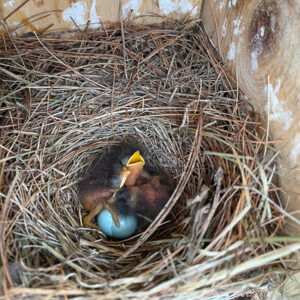
Recently-hatched Bluebirds at Oak Point Farm (note the crack in the unhatched egg, which suggests that the egg is about to hatch)
Five Bluebird eggs, marking a second brood, have been deposited in a nest at Penny Lake since June 15th, while six young Tree Swallows and seven young Black-capped Chickadees fledged on June 18th and 24th, respectively.
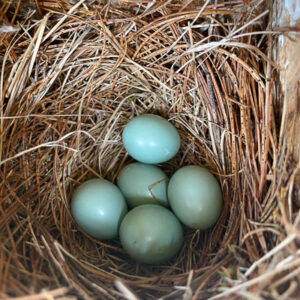
Five (second brood) Bluebird eggs at Penny Lake
Eleven young Tree Swallows are believed to have fledged at Zak Preserve last week, with no sign yet of a second Bluebird nesting effort.
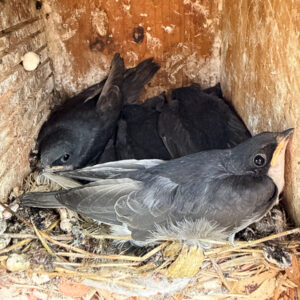
Young Tree Swallows are ready to fledge at Zak Preserve
Finally, Singing Meadows remains active with two nest sites containing eleven (second brood) Bluebird eggs. Four young Bluebirds are believed to have fledged today (28 June), while four young Tree Swallows are expected to fledge within the next two days.
June 15:
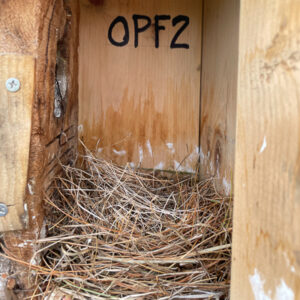
Newly constructed Bluebird nest at Oak Point Farm
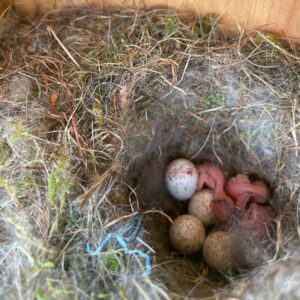
Three just-hatched Chickadee babies at Penny Lake Preserve
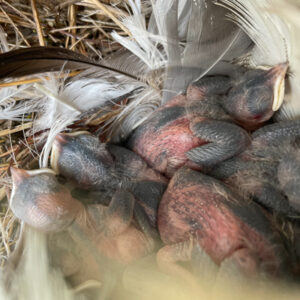
Recently hatched Tree Swallows at Penny Lake Preserve
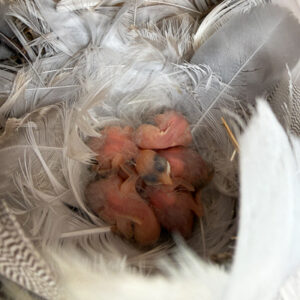
Six newly hatched Tree Swallows at Zak preserve (note the feathers that are a feature of all Tree Swallow nests)
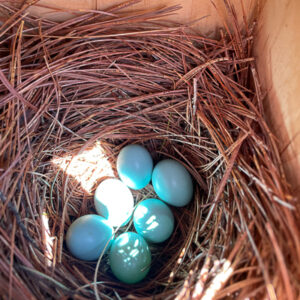
Bluebird eggs at Singing Meadows
Tree Swallows currently nesting on six Land Trust preserves may break a record for the number of youngsters raised this year. So far at least 59 eggs have been deposited in eleven nest boxes, with several more expected to be seen. None of these eggs have hatched yet, since Tree Swallows start nesting a few weeks after the Bluebirds. When they do hatch, there’s likely to be something of a bird traffic jam in the skies over the Boothbay peninsula!

Tree Swallow eggs
Closing out the nesting bird news is a nest box at Penny Lake that is hosting a Black-capped Chickadee. This is not unusual, but it also does not occur every year. There are seven eggs in the nest, and we hope all will hatch, grow, and fledge successfully.
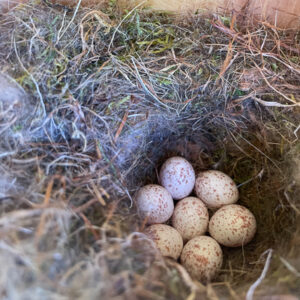
Black-capped Chickadee eggs
We have seen no activity on the Osprey nest platform at Oak Point yet, but there still might be time for a pair of “Seahawks” to take up residence and start building a nest. If it doesn’t happen this year, we believe it will occur in 2027.
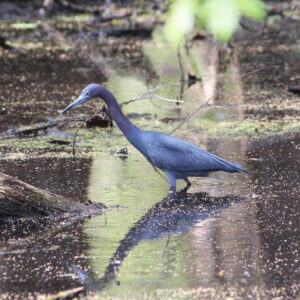
Bird breeding activity in the Boothbay area is picking up with Tree Swallows starting to lay eggs in nests on several BRLT preserves. Autumn View currently has 9 Tree Swallow eggs in 2 different nests and 4 Easter Bluebird eggs in another nest. There are 4 growing young Bluebirds at Lobster Cove Meadow and 4 more young Bluebirds at Oak Point Farm. Tree Swallows are not to be outdone at Oak Point, boasting 9 new eggs in 2 different nests. Penny Lake is doing well with 4 young Bluebirds in 1 nest and at least 3 Tree Swallow eggs in another. Singing Meadows still leads with 9 young Bluebirds in 2 different nests. And finally, Zak is doing well with 3 young growing Bluebirds and 6 new Tree Swallow eggs.
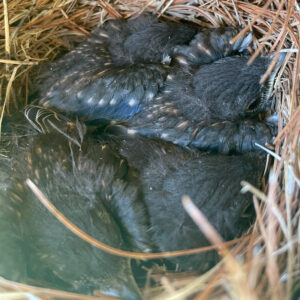
Young Bluebirds at Penny Lake
Tree Swallow eggs at Zak preserve
The Osprey nest platform at Oak Point hosted the first reported visit of an Osprey on Wednesday, 20 May. It’s too soon to say if there will be repeated visits.
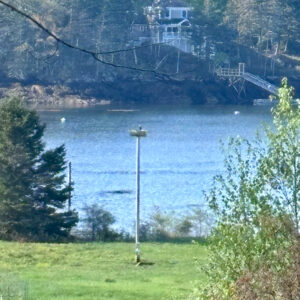
Osprey visiting nestbox at Oak Point Farm
The Kestrel nest box at Zak Preserve, which is being monitored by Midcoast Audubon, had a few brief visits by a male Kestrel last week, but no evidence of nesting activity has been identified since that time.
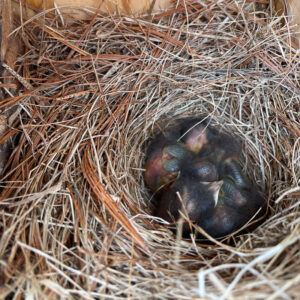
Baby Bluebirds at Oak Point Farm
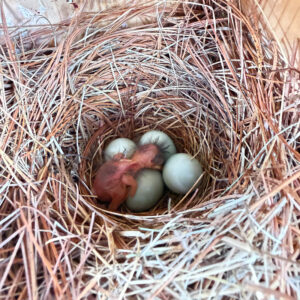
Baby Bluebird hatchling at Zak Preserve
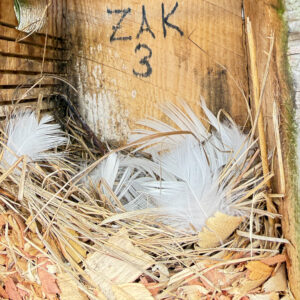
Tree Swallow nest at Zak Preserve, ready for eggs
Despite some cooler-than-usual weather, spring bird breeding activity is off to a good start on the Boothbay peninsula. Eastern Bluebirds have not only started building nests on most of our land trust preserves, but they also have already laid eggs in at least four of those nests. Singing Meadows is currently in the lead with four nests, one of which already has four eggs. Eggs are anticipated in the other three nests in the near term.
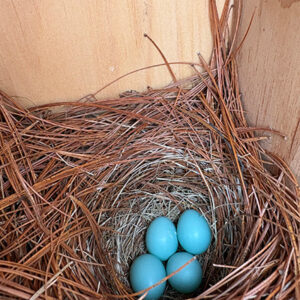
So far, Oak Point Farm and Penny Lake Preserves each have one Bluebird egg each in a nest, with more anticipated this week.
Lobster Cove Meadow and Zak preserves have one nest each with Bluebird eggs expected soon. Autumn View has Bluebirds and Tree Swallows hanging around, and nests with eggs are anticipated there as well.
The spring bird migration is well underway, as exemplified by the birdsong that is easily heard on the preserves. By far, the most vocal birds you are likely to hear during a walk on the trails include Song Sparrows, Goldfinches, Robins, Red-winged Blackbirds, Titmice, Black-capped Chickadees, and Cardinals. Many other bird species will be arriving daily, adding their songs to the avian symphony.
For those of you who like to walk at Oak Point Farm, you will likely see a new bird-related “structure” on the property. An Osprey nest platform was recently installed to the right of the trail from the farmhouse to the dock. We are hopeful that a pair of Ospreys will soon find the platform to their liking and build a nest on it this season.